
Alberta Occupational Health and Safety Explanation Guide: Article Plan
Alberta’s OHS framework, encompassing the Act, Regulation, and Code, establishes legal requirements for workplace safety. This guide clarifies these rules, promoting worker well-being and employer compliance.
Alberta Occupational Health and Safety (OHS) is a comprehensive system designed to protect the health, safety, and well-being of workers throughout the province. Rooted in legislation, it establishes a framework of rights, responsibilities, and duties for all parties in the workplace – employers, workers, and supervisors. The system isn’t merely about preventing accidents; it’s about fostering a proactive safety culture where hazard identification and risk management are integral to daily operations.
The foundation of Alberta OHS lies within the Occupational Health and Safety Act, accompanied by its supporting Regulation and Code. These documents outline specific requirements for various industries and work activities, covering everything from fall protection and confined space entry to hazardous materials handling and emergency preparedness. Understanding these core components is crucial for ensuring compliance and creating a safe working environment.
Historically, resources like the Alberta OHS Code Explanation Guide aided in interpreting these complex regulations. While the official guide is no longer freely available in PDF format, the principles remain vital. Recent events, such as investigations into workplace fatalities involving tree planters and incidents at tour bus companies, underscore the critical importance of robust OHS practices and diligent adherence to established standards. The system continually evolves, with recent changes impacting employer obligations and worker protections.
The OHS Act: Core Principles
The Alberta Occupational Health and Safety (OHS) Act is built upon several core principles designed to prioritize worker safety and well-being. A primary tenet is the right to know – workers must be informed about hazards in their workplace and receive adequate training to perform their jobs safely. Closely linked is the right to participate, empowering workers to actively contribute to OHS initiatives, often through joint health and safety committees.
The Act establishes a clear hierarchy of responsibility, placing the onus on employers to ensure a safe work environment. This includes proactively identifying and mitigating hazards, providing appropriate personal protective equipment (PPE), and establishing effective emergency response procedures. The principle of due diligence requires employers to demonstrate a commitment to safety beyond mere compliance, actively seeking ways to improve OHS performance.
Furthermore, the OHS Act emphasizes prevention as the most effective safety strategy. This involves conducting thorough hazard assessments, implementing robust risk management controls, and continuously monitoring workplace conditions. The Act also grants authority to Alberta Labour to enforce OHS regulations, investigate incidents, and impose penalties for violations, reinforcing the seriousness of OHS compliance.
Key Legislation – Act, Regulation, and Code
Alberta’s occupational health and safety (OHS) legislative framework comprises three interconnected components: the Occupational Health and Safety Act, the Occupational Health and Safety Regulation, and the Alberta OHS Code. The Act establishes the overarching principles and general duties for workplace safety, outlining the fundamental rights and responsibilities of employers and workers.
The Regulation provides more specific requirements and details, expanding upon the principles outlined in the Act. It addresses a wide range of workplace hazards and sets out detailed standards for various industries and work activities. This includes requirements for hazard assessment, control measures, training, and record-keeping.
The Alberta OHS Code, formerly a comprehensive document, offered practical guidance on implementing the Act and Regulation. However, as of recent updates (including discontinuation of the free PDF guide), information is now dispersed. It previously detailed specific procedures and best practices for managing OHS risks. Understanding the interplay between these three elements is crucial for ensuring full compliance and fostering a safe and healthy work environment in Alberta. Employers must stay informed of legislative changes.
Worker Rights and Responsibilities
Alberta workers possess fundamental rights under the Occupational Health and Safety Act, ensuring a safe and healthy work environment. These rights include the right to know about workplace hazards, to participate in OHS committees, and to refuse unsafe work without fear of reprisal. Workers also have the right to file complaints regarding OHS concerns without retribution.
Alongside these rights come crucial responsibilities. Workers are obligated to protect their own health and safety by following safe work procedures, using required personal protective equipment (PPE), and reporting any hazards or unsafe conditions to their employer or supervisor. Active participation in OHS training and a commitment to workplace safety protocols are essential.
Furthermore, workers must cooperate with employers and OHS officers in implementing and maintaining a safe workplace. This includes assisting with investigations and contributing to the development of effective hazard control measures. Understanding and exercising these rights and fulfilling these responsibilities are vital for a collaborative and secure work atmosphere.
Employer Duties and Obligations

Alberta employers bear significant legal duties under the Occupational Health and Safety Act to ensure the safety and health of their employees. These obligations begin with providing a safe and healthy workplace, encompassing everything from physical conditions to work processes. Employers must conduct hazard assessments to identify potential risks and implement effective control measures to eliminate or minimize those risks.
A core responsibility is providing comprehensive OHS training to all employees, equipping them with the knowledge and skills to perform their jobs safely. This includes training on hazard recognition, safe work procedures, and the proper use of PPE. Employers are also required to establish and maintain an OHS program, including an emergency response plan.
Furthermore, employers must promptly investigate all incidents and near misses to determine root causes and prevent recurrence. Maintaining accurate records of injuries, illnesses, and inspections is also crucial. Compliance with these duties isn’t just a legal requirement; it’s a fundamental ethical obligation to protect the well-being of the workforce.
The Role of the Alberta Labour
The Alberta Labour division plays a critical role in administering and enforcing the province’s Occupational Health and Safety (OHS) legislation. Its primary function is to ensure compliance with the OHS Act, Regulation, and Code, safeguarding the health and safety of Alberta workers. This is achieved through various means, including workplace inspections, investigations of incidents, and the provision of guidance and education to employers and employees.
OHS officers conduct proactive inspections to identify potential hazards and ensure workplaces are adhering to safety standards. They also respond to complaints and investigate serious incidents, such as injuries or fatalities. When violations are found, officers have the authority to issue orders requiring corrective action, and to levy penalties for non-compliance.
Beyond enforcement, Alberta Labour provides resources and support to promote a positive safety culture. This includes offering training programs, publishing safety information, and facilitating communication between employers and employees. Ultimately, the Alberta Labour strives to create a safer and healthier work environment for all Albertans.
OHS Committees: Formation and Function
Occupational Health and Safety (OHS) committees are a cornerstone of Alberta’s workplace safety system, mandated in many workplaces under the OHS Act. These committees foster collaborative efforts between employers and workers to identify and address health and safety concerns. Formation requires representation from both management and labour, ensuring diverse perspectives are considered.
The primary function of an OHS committee is to proactively promote safety within the workplace. This involves conducting regular inspections, investigating incidents, and making recommendations for improvement. Committees review safety policies and procedures, and participate in hazard assessments and risk management processes.
Effective OHS committees facilitate open communication, empowering workers to voice concerns and contribute to a safer work environment. They also play a vital role in promoting safety awareness and training. Properly functioning committees are crucial for preventing injuries and illnesses, and for cultivating a strong safety culture within organizations throughout Alberta.
Hazard Assessment and Risk Management
Hazard assessment is a systematic process of identifying potential sources of harm in the workplace, a fundamental requirement under Alberta’s Occupational Health and Safety (OHS) legislation. This involves examining all aspects of work activities, equipment, and the work environment to pinpoint hazards that could cause injury or illness.
Following hazard identification, risk management comes into play. This entails evaluating the likelihood and severity of harm resulting from each identified hazard. A risk matrix is often used to prioritize hazards based on their potential impact. Control measures are then implemented to eliminate or minimize these risks.
Effective risk management utilizes a hierarchy of controls, prioritizing elimination, substitution, engineering controls, administrative controls, and finally, personal protective equipment (PPE). Regular review and updating of hazard assessments and risk management plans are crucial to ensure ongoing effectiveness and adapt to changing workplace conditions, fostering a proactive safety culture.
Workplace Inspections: Procedures and Findings
Regular workplace inspections are a cornerstone of Alberta’s OHS program, mandated to proactively identify hazards and ensure compliance with safety regulations. These inspections, conducted by joint OHS committees, supervisors, or Alberta Labour officers, follow established procedures.
Inspection procedures involve a systematic examination of the work environment, equipment, and work practices. Inspectors utilize checklists and observe work activities to identify potential risks. Documenting findings, including hazard descriptions, corrective actions needed, and timelines for completion, is critical.
Following an inspection, a report detailing the findings is generated and distributed to relevant parties. Corrective actions are implemented to address identified hazards. Follow-up inspections verify the effectiveness of these actions. Alberta Labour inspections can result in orders requiring immediate remediation or penalties for non-compliance. Maintaining thorough inspection records demonstrates due diligence and a commitment to workplace safety.
Incident Investigation and Reporting
Alberta’s OHS regulations mandate thorough incident investigation and reporting for all workplace occurrences resulting in injury, illness, or property damage exceeding a specified threshold. The primary goal is not to assign blame, but to identify root causes and prevent recurrence.
Investigations should be conducted promptly by a competent team, utilizing techniques like witness interviews, site inspections, and document review. Detailed reports must document the incident’s sequence of events, contributing factors, and recommended corrective actions. These reports are submitted to Alberta Labour within prescribed timelines.

Reporting requirements vary based on the severity of the incident. Serious injuries or fatalities require immediate notification. Proper documentation and analysis are crucial for identifying systemic issues and improving safety protocols. Failure to report incidents or conduct adequate investigations can result in penalties. A proactive incident reporting culture fosters continuous improvement in workplace safety.
Common Workplace Hazards in Alberta
Alberta’s diverse industries present unique workplace hazards. In the oil and gas sector, risks include exposure to hazardous substances, working at heights, and confined space entry. Construction sites commonly face fall hazards, struck-by incidents, and equipment malfunctions.
Agriculture presents dangers related to machinery operation, livestock handling, and chemical exposure. Forestry workers contend with tree falling, equipment operation in challenging terrain, and wildlife encounters. Transportation industries face risks from vehicle accidents, long-haul driving fatigue, and cargo handling.
Beyond industry-specific hazards, common risks across Alberta workplaces include slips, trips, and falls; ergonomic stressors; exposure to noise and vibration; and psychological hazards like workplace violence and harassment. Effective hazard identification, risk assessment, and control measures are vital for protecting workers. Regular training and adherence to OHS regulations are paramount in mitigating these risks.
Fall Protection Requirements
Alberta’s OHS Code mandates comprehensive fall protection when working at heights exceeding 1.8 meters (6 feet). This includes utilizing guardrails, safety nets, or personal fall arrest systems (PFAS). PFAS consist of a full-body harness, lanyard, and anchorage point capable of supporting at least 22.2 kN (5,000 lbs).

Employers must ensure proper inspection of fall protection equipment before each use, removing damaged items from service. Workers require thorough training on the correct use, inspection, and limitations of fall protection systems. Rescue plans are crucial; prompt rescue is vital after a fall to prevent suspension trauma.
Specific requirements apply to various work scenarios, such as roofing, scaffolding, and window cleaning. Temporary work platforms must meet specific structural integrity standards. Employers must conduct hazard assessments to determine appropriate fall protection measures for each task. Compliance with these regulations is essential for preventing serious injuries and fatalities.
Confined Space Entry Procedures
Alberta’s OHS Code defines confined spaces as areas with limited entry/exit and potential hazards like oxygen deficiency, toxic gases, or engulfment. Entry requires a comprehensive permit-based system, ensuring a safe work environment.
Before entry, a hazard assessment must identify potential dangers. Atmospheric testing is crucial to verify safe oxygen levels, flammable gas concentrations, and the absence of toxic substances. Continuous monitoring is required during occupancy. Ventilation may be necessary to maintain breathable air.
Attendants must remain outside the space, maintaining communication with entrants and initiating rescue if needed. Rescue plans must be in place, utilizing appropriate equipment like retrieval systems. Workers require specialized training on confined space hazards, entry procedures, and emergency response. Proper lockout/tagout procedures are essential to isolate energy sources. Compliance minimizes risks associated with these hazardous environments.
Lockout/Tagout Procedures
Alberta’s OHS regulations mandate strict Lockout/Tagout (LOTO) procedures to prevent the unexpected energization or startup of machinery during maintenance or servicing. These procedures safeguard workers from serious injuries caused by hazardous energy release.
The LOTO process begins with identifying all energy sources – electrical, mechanical, pneumatic, hydraulic, thermal, and gravitational. Each energy source must be isolated and secured using appropriate lockout devices (locks) and tagout devices (tags). Only authorized personnel can perform LOTO procedures.

Detailed written procedures, specific to each piece of equipment, are essential. Verification of isolation is critical before work commences, ensuring no residual energy remains. Tags clearly indicate “Do Not Operate” and the reason for the lockout. Group lockout procedures are used when multiple workers are involved. Proper training is paramount for all personnel involved in LOTO, ensuring a safe and controlled work environment.
Personal Protective Equipment (PPE)
Alberta’s OHS regulations require employers to provide, at no cost to employees, appropriate Personal Protective Equipment (PPE) when hazards cannot be adequately controlled through other means. A comprehensive hazard assessment dictates the necessary PPE for each task.
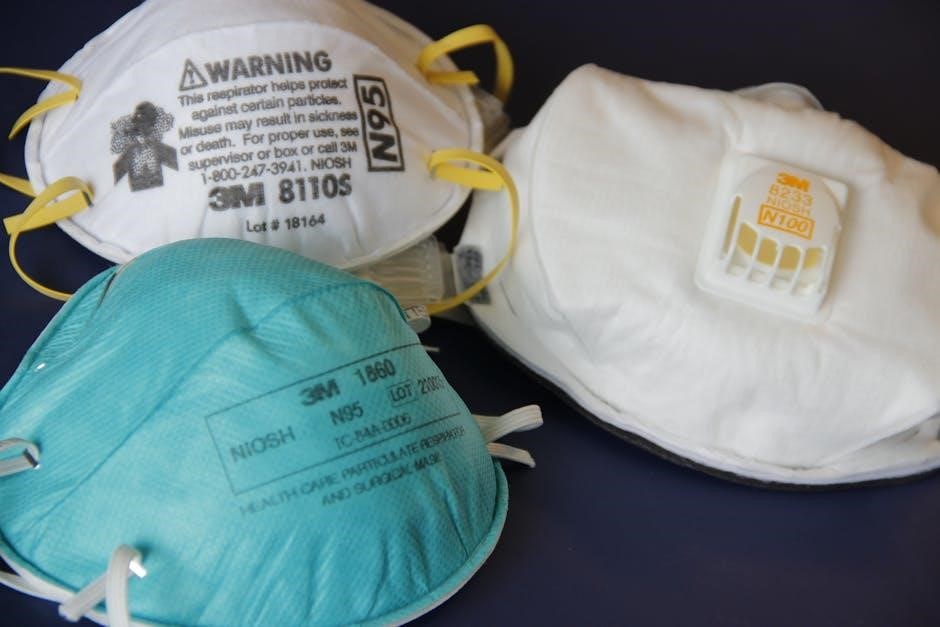
Common PPE includes eye and face protection (safety glasses, goggles, face shields), head protection (hard hats), foot protection (safety boots), hand protection (gloves), respiratory protection (respirators), and hearing protection (earplugs, earmuffs). Proper fit and maintenance are crucial for PPE effectiveness.
Employers must ensure employees are trained on the correct use, care, and limitations of PPE. Regular inspections are necessary to identify damaged or worn-out equipment. Employees are responsible for using PPE as instructed and reporting any defects. The hierarchy of hazard control prioritizes elimination or substitution before relying on PPE as a final safeguard, ensuring a robust safety program.
First Aid and Emergency Response

Alberta’s OHS legislation mandates employers to provide adequate first aid facilities and trained personnel based on workplace hazards and employee numbers. First aid kits must be readily accessible and appropriately stocked, with regular inspections to ensure supplies are current.
The required level of first aid training varies from basic to advanced, depending on the risk level. Designated first aid attendants must be certified and maintain their qualifications. Emergency response plans are crucial, outlining procedures for various scenarios like fires, medical emergencies, and hazardous material releases.
These plans should include evacuation routes, communication protocols, and contact information for emergency services. Regular drills are essential to familiarize employees with emergency procedures. Employers must ensure employees know the location of first aid supplies and the names of designated first aiders, fostering a prepared and responsive workplace.
WHMIS (Workplace Hazardous Materials Information System)
Alberta’s adoption of WHMIS ensures workers are informed about hazardous materials used in the workplace. This system centers around hazard communication, encompassing labels, safety data sheets (SDS), and worker training. Proper labeling is critical, clearly identifying the product and its associated hazards using standardized pictograms and signal words.
SDS provide comprehensive information on a product’s properties, hazards, safe handling procedures, and emergency measures. Employers are obligated to make SDS readily accessible to all employees. Comprehensive worker training is paramount, covering hazard identification, safe work practices, and the proper use of personal protective equipment (PPE).
WHMIS training must be regularly updated to reflect changes in regulations or the introduction of new hazardous materials. Effective implementation of WHMIS minimizes risks associated with chemical exposure, promoting a safer and healthier work environment for all Alberta workers.

Violence and Harassment in the Workplace
Alberta’s OHS legislation mandates a safe and respectful work environment, explicitly addressing violence and harassment. Employers have a legal duty to take reasonable steps to prevent and address these issues, fostering a culture of psychological safety for all employees.
This includes developing and implementing comprehensive policies prohibiting violence and harassment, clearly defining unacceptable behaviors, and establishing reporting procedures. Employers must investigate all complaints promptly and thoroughly, taking appropriate corrective action when necessary.
Worker training is crucial, educating employees on recognizing, reporting, and responding to incidents of violence and harassment. Policies should outline support resources available to victims, and emphasize non-retaliation for reporting concerns. A proactive approach, focused on prevention and early intervention, is essential for creating a workplace free from violence and harassment, aligning with Alberta’s commitment to worker well-being.
Recent Changes to Alberta OHS Legislation (as of 12/31/2025)
As of December 31, 2025, Alberta’s OHS legislation has undergone several key amendments aimed at enhancing worker protection and modernizing safety standards. Notably, revisions to the OHS Code clarify requirements for psychological hazard assessment and control, reflecting a growing emphasis on mental health in the workplace.
Updates to the confined space entry procedures now mandate more stringent atmospheric monitoring and rescue planning, addressing concerns raised following recent incidents. Amendments regarding incident reporting now require more detailed information regarding near misses, promoting proactive hazard identification.
Furthermore, the legislation now includes specific provisions addressing the risks associated with increasingly prevalent technologies, such as remote work and automation. Employers are now legally obligated to provide training on cybersecurity and ergonomic considerations for remote workers. These changes demonstrate Alberta’s ongoing commitment to adapting OHS regulations to address evolving workplace challenges.
Penalties for OHS Violations
Alberta’s OHS legislation outlines a tiered system of penalties for violations, designed to ensure compliance and deter unsafe practices. These penalties range from administrative fines to criminal prosecution, depending on the severity and nature of the infraction. For minor violations, such as failing to maintain proper records, administrative penalties can reach up to $5,000.
More serious violations, including those resulting in worker injury or death, can lead to substantially higher fines – potentially exceeding $500,000 for corporations and $100,000 for individuals. In cases of gross negligence or willful misconduct, criminal charges may be laid, resulting in imprisonment.
Recent cases, such as those involving the 2020 Jasper National Park bus crash and the 2021 Grande Prairie workplace fatality, demonstrate the government’s willingness to pursue significant penalties against companies failing to uphold OHS standards. Repeat offenders face escalated penalties, reinforcing the importance of proactive safety management.
Resources and Further Information

Alberta Labour provides a comprehensive suite of resources to support OHS compliance. The official Alberta Government website (https://www.alberta.ca/occupational-health-safety.aspx) offers access to the OHS Act, Regulation, and Code, alongside numerous guides, fact sheets, and training materials.
While the detailed Alberta OHS Code Explanation Guide in PDF format has been discontinued, many alternative resources remain available. Industry associations often provide sector-specific OHS guidance and training programs. Additionally, several private companies offer OHS consulting services and training courses.
The HANDI-GUIDE to Alberta’s OHS Act, Regulation, and Code serves as a valuable reference tool. For immediate assistance or to report OHS concerns, contact Alberta Labour’s OHS contact centre. Staying informed about legislative updates is crucial; regularly check the government website for announcements regarding changes to OHS legislation;

Case Studies: Alberta OHS Incidents & Lessons Learned
Analyzing past Alberta OHS incidents provides invaluable learning opportunities. In 2021, three companies faced charges following a workplace fatality in Grande Prairie, highlighting the importance of robust safety protocols and diligent hazard control. This case underscored the need for comprehensive risk assessments and effective communication.
The 2020 Jasper National Park tour bus crash, resulting in fatalities, led to charges under the Alberta Occupational Health and Safety Act. This incident emphasized the critical role of vehicle maintenance, driver training, and adherence to safety regulations in the transportation sector.
A recent investigation into the death of a tree planter near Highway 58 demonstrated the dangers faced by workers in remote locations. This tragic event reinforced the necessity of proper emergency response plans, adequate first aid training, and thorough site hazard assessments. These cases demonstrate that proactive OHS management is paramount to preventing future incidents and protecting Alberta workers.