For Living Air Conditioner Manual: A Comprehensive Guide (Updated 02/03/2026)
For Living air conditioners offer diverse cooling solutions, from 5,000 BTU window units for 150 sq ft rooms to powerful 18,000 BTU models covering 1,000 sq ft.
For Living air conditioners represent a commitment to providing accessible and effective climate control solutions for a variety of needs. Catering to diverse spaces and budgets, the brand offers a range of options, including portable and window units, designed to enhance comfort throughout the year. As of today, February 3rd, 2026, For Living stands as a popular choice for consumers seeking reliable cooling and dehumidifying capabilities.
The product line includes models like the 7K SACC (10K ASHRAE) Digital Portable Air Conditioner, ideal for spaces up to 300 square feet, functioning as a versatile 2-speed cooling, dehumidifying, and fan combination. Simultaneously, the Cool Living CL-18000TW (18,000 BTU) Air Conditioner provides robust cooling for larger areas, up to 1,000 square feet, and boasts energy-saving features. Even simpler options, such as the For Living Manual Window Air Conditioner with 5,000 BTU, offer efficient cooling for smaller rooms.
This comprehensive guide aims to equip users with the knowledge necessary to effectively install, operate, and maintain their For Living air conditioners, ensuring optimal performance and longevity. We will cover everything from understanding BTU ratings to troubleshooting common issues, all while prioritizing safety and energy efficiency.
Understanding BTU Ratings and Room Size
British Thermal Units (BTUs) are the standard measurement for an air conditioner’s cooling capacity. A higher BTU rating indicates a greater ability to remove heat from a room. Selecting the correct BTU rating is crucial for optimal performance and energy efficiency; an undersized unit will struggle to cool effectively, while an oversized unit may cycle on and off too frequently, leading to inconsistent temperatures and wasted energy.
Generally, a good rule of thumb is to calculate 20 BTU per square foot of living space. However, several factors can influence this calculation. Ceiling height, window size and direction, insulation quality, and the number of heat-generating appliances all play a role. For example, a 150 sq ft room, as suited for the Cool Living 5,000 BTU window unit, requires approximately 3,000 BTU. Conversely, a 1,000 sq ft space, ideal for the Cool Living CL-18000TW (18,000 BTU), needs around 20,000 BTU.
The For Living 7K SACC (10K ASHRAE) portable unit, effective for up to 300 sq ft, demonstrates the importance of considering both SACC and ASHRAE ratings, as they represent different testing standards; Proper BTU selection ensures comfortable cooling and minimizes energy consumption.
For Living 7K SACC (10K ASHRAE) Portable Air Conditioner: Overview
The For Living 7K SACC (10K ASHRAE) Digital Portable Air Conditioner, available at Canadian Tire, presents a versatile cooling solution for spaces up to 300 square feet. This unit isn’t solely an air conditioner; it functions as a dehumidifier and fan, providing year-round climate control. Its portability allows for easy movement between rooms, eliminating the need for permanent installation.

Featuring a digital interface and a convenient remote control, operation is streamlined and user-friendly. The two-speed settings offer customizable comfort levels, adapting to individual preferences and ambient temperatures. The SACC (Seasonal Adjusted Cooling Capacity) rating of 7,000 BTU and ASHRAE (Association of Home Appliance Manufacturers) rating of 10,000 BTU reflect different testing methodologies, providing a comprehensive understanding of its cooling power.
This white-finished unit is designed for efficiency and convenience, making it an ideal choice for apartments, bedrooms, or smaller living areas. Its compact design doesn’t compromise on performance, delivering effective cooling, dehumidifying, and air circulation.
For Living 5,000 BTU Window Air Conditioner: Overview
The For Living Manual Window Air Conditioner, a 5,000-BTU unit available at Canadian Tire, is designed to provide efficient cooling for smaller spaces. This unit excels at creating a refreshing environment, making it ideal for bedrooms or rooms up to 150 square feet. Its manual controls offer a straightforward operation, allowing users to easily adjust settings to their desired comfort level.
This window unit is engineered for easy installation, often including a kit to simplify the process. While specific details regarding the installation kit aren’t readily available, the focus remains on user-friendliness. The white finish blends seamlessly with most window frames and interior décor.
The 5,000 BTU cooling capacity makes it a suitable choice for individuals seeking targeted cooling without the energy consumption of larger units. It’s a practical solution for maintaining a comfortable temperature during warmer months, offering a balance between performance and affordability.

Cool Living CL-18000TW (18,000 BTU) Air Conditioner: Overview
The Cool Living CL-18000TW is a robust air conditioning solution, boasting an 18,000 BTU cooling capacity. According to North NJ HVAC, this model is capable of effectively cooling larger areas, up to 1,000 square feet, making it suitable for living rooms or open-concept spaces. It operates on a 230V power supply, a specification to consider during installation.
This unit features multi-speed fan settings, allowing users to customize airflow to their preference. A key benefit highlighted is its energy-saving settings, designed to minimize electricity consumption and reduce operating costs over time. This focus on efficiency makes it a practical choice for long-term use.
The retail price for the Cool Living CL-18000TW typically falls within the $600-$700 range, positioning it as a mid-to-high-end option. Its combination of powerful cooling, versatile features, and energy efficiency makes it a compelling choice for those seeking substantial climate control.
Installation Guide: Window Units
Installing a For Living window air conditioner requires careful attention to ensure optimal performance and safety. Begin by verifying the window’s suitability – it must be a double-hung window and structurally sound. The included installation kit, as noted by Walmart.com for the Cool-Living 5,000 BTU model, is crucial for a secure fit.
First, attach the mounting brackets to the window frame, ensuring they are level. Next, carefully position the air conditioner within the brackets. Extend the side panels to fill the gaps, preventing air leakage and maximizing cooling efficiency. Secure the front panel to the window frame.

Proper drainage is vital; ensure the unit is slightly tilted outwards to allow condensation to escape. Finally, plug in the unit and test its operation. Always follow the manufacturer’s specific instructions included with your model for detailed guidance and safety precautions. A properly installed unit will deliver efficient and reliable cooling.
Installation Guide: Portable Units
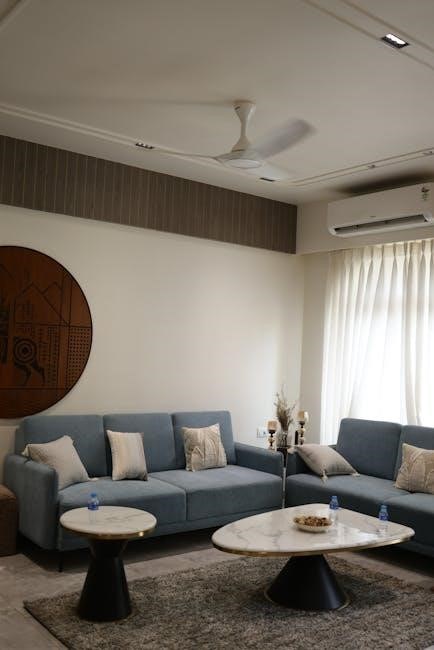
Setting up a For Living portable air conditioner, like the 7K SACC (10K ASHRAE) model from Canadian Tire, is generally straightforward. Begin by positioning the unit near a window for exhaust hose ventilation. Locate the window kit, designed to seal around the exhaust hose and prevent warm air from re-entering the room.
Assemble the window kit according to the included instructions, adjusting the panels to fit your window’s dimensions. Insert the exhaust hose into the designated port on the air conditioner and securely connect it to the window kit. Ensure a tight seal to maximize cooling efficiency.
Plug in the unit and power it on. Some models may require a brief initial setup process. Regularly check the hose connections for leaks and ensure the unit is placed on a level surface. Proper installation guarantees optimal performance and prevents energy waste.
Operating Modes: Cooling, Fan, and Dehumidifying
For Living air conditioners offer versatile operation with distinct modes to suit your needs. The Cooling mode utilizes the compressor to actively lower room temperature, ideal for hot days. Adjust the temperature setting on the unit or remote control to your desired comfort level;
Fan mode circulates air without cooling, providing ventilation and a gentle breeze. This is useful for distributing air or when cooling isn’t required. The dehumidifying mode removes excess moisture from the air, enhancing comfort and preventing mold growth, even without significant cooling.
Many models, like the 7K SACC portable unit, feature multiple fan speeds for customized airflow. Explore these settings to find the optimal balance between comfort and energy efficiency. Refer to your specific model’s control panel or remote for detailed mode selection instructions.
Remote Control Functionality
For Living air conditioners often include a convenient remote control for effortless operation. The remote typically mirrors the functions available on the unit’s control panel, allowing you to adjust settings from across the room. Key functions include power on/off, temperature adjustment, mode selection (Cool, Fan, Dehumidify), and fan speed control.
Many remotes feature a “Sleep” mode, which gradually increases the temperature overnight for energy savings and comfortable sleep. Some models also offer a timer function, enabling you to schedule the air conditioner to turn on or off automatically.
Ensure the remote control has fresh batteries for optimal performance. Point the remote directly at the air conditioner’s sensor for reliable communication. If the remote becomes unresponsive, check the batteries and ensure there are no obstructions blocking the signal.
Maintenance: Filter Cleaning
Regular filter cleaning is crucial for maintaining the efficiency and air quality of your For Living air conditioner. Dirty filters restrict airflow, forcing the unit to work harder and consume more energy. It also compromises cooling performance and can lead to component failure.
Most For Living models feature easily accessible filters, typically located on the front or side of the unit. The frequency of cleaning depends on usage, but generally, cleaning the filter every two weeks during heavy use is recommended. In less dusty environments, monthly cleaning may suffice.
To clean the filter, gently remove it from the unit. Vacuum the filter to remove loose dust and debris. For a more thorough cleaning, wash the filter with mild soap and water, then rinse completely and allow it to dry thoroughly before reinstalling. Never operate the air conditioner without a filter in place.
Maintenance: Coil Cleaning
Maintaining clean condenser and evaporator coils is vital for optimal performance of your For Living air conditioner. Over time, dust and debris accumulate on the coils, hindering heat transfer and reducing cooling efficiency. This leads to increased energy consumption and potential system strain.
Before cleaning, always disconnect the power to the air conditioner. For window units, this means unplugging it. For portable units, disconnect from the power outlet. Use a vacuum cleaner with a brush attachment to gently remove loose dirt from the coils.
For stubborn dirt, a commercially available coil cleaner can be used, following the manufacturer’s instructions carefully. Avoid bending the delicate fins. After cleaning, allow the coils to dry completely before restoring power and operating the unit. Regular coil cleaning, ideally annually, ensures efficient and reliable cooling performance.
Troubleshooting: Common Issues and Solutions
Encountering issues with your For Living air conditioner? Here are some common problems and solutions. If the unit isn’t cooling, first check the air filter – a clogged filter restricts airflow; Ensure the unit is properly sealed, especially window units, to prevent warm air from entering.

If the unit is making unusual noises, inspect for loose parts or obstructions. For portable units, confirm the exhaust hose is correctly installed and not kinked. If the unit leaks water, verify proper drainage and check for a clogged drain line.
If the remote control isn’t working, replace the batteries. If the problem persists, consult the error code section or contact customer support. Always disconnect power before attempting any repairs. Remember, attempting complex repairs yourself may void the warranty.
Troubleshooting: Error Codes
Your For Living air conditioner utilizes error codes to diagnose internal issues. While specific codes vary by model, here’s a general guide. “E1” often indicates a sensor malfunction, requiring professional service. “E2” typically signals a compressor error, also needing expert attention.
“E3” frequently points to a blocked or faulty fan motor. “E4” can signify a refrigerant leak, a serious issue demanding immediate repair. If your unit displays “E5”, it may indicate an overcurrent protection activation – try resetting the unit after ensuring proper voltage.
Important: These are common interpretations. Always consult your specific model’s manual for precise error code definitions. Ignoring error codes can lead to further damage. If an error code persists after troubleshooting, or if you are uncomfortable attempting repairs, contact For Living customer support for assistance.
Energy Efficiency Tips for For Living Air Conditioners
Maximize the efficiency of your For Living air conditioner and minimize energy costs with these simple tips. Regularly clean the air filter – a dirty filter forces the unit to work harder, consuming more power. Utilize the “Fan Only” mode when cooling isn’t needed, circulating air with less energy expenditure.
For portable units, ensure proper venting to prevent warm air from re-entering the room. Seal any gaps around window-mounted units with weather stripping to prevent air leaks. Consider using a programmable thermostat to automatically adjust temperatures when you’re away or asleep.
The Cool Living CL-18000TW model boasts energy-saving settings; explore these features. Avoid placing the unit in direct sunlight, as this increases the cooling load. Remember, a well-maintained and strategically used air conditioner translates to significant energy savings!
Safety Precautions

Prioritize safety when operating your For Living air conditioner. Always ensure the unit is properly grounded to prevent electrical shock. Never operate the air conditioner with a damaged power cord or plug. Keep the unit away from flammable materials and liquids.
For window units, secure the installation properly to prevent falls. Do not insert objects through the air vents. Regularly inspect the unit for any signs of damage. If you notice unusual noises or smells, immediately disconnect the power and consult a qualified technician.
Portable units require careful handling; avoid tipping or moving while operating. Keep children and pets away from the unit. Never attempt to repair the air conditioner yourself; contact customer support for assistance. Following these precautions will ensure safe and reliable operation of your For Living appliance.
Warranty Information and Customer Support
For Living air conditioners are backed by a manufacturer’s warranty, typically covering defects in materials and workmanship. The standard warranty period is one year from the date of purchase, though specific terms may vary by model and retailer like Canadian Tire or Walmart. Retain your proof of purchase for warranty claims.
To initiate a warranty claim, contact For Living customer support. Support is generally available through the retailer where you purchased the unit. You can find contact information on their respective websites or packaging. Be prepared to provide your model number, serial number, and a detailed description of the issue.
For general inquiries, troubleshooting assistance, or to access digital manuals, visit the retailer’s website. For Living aims to provide responsive customer service to ensure your satisfaction with their products.